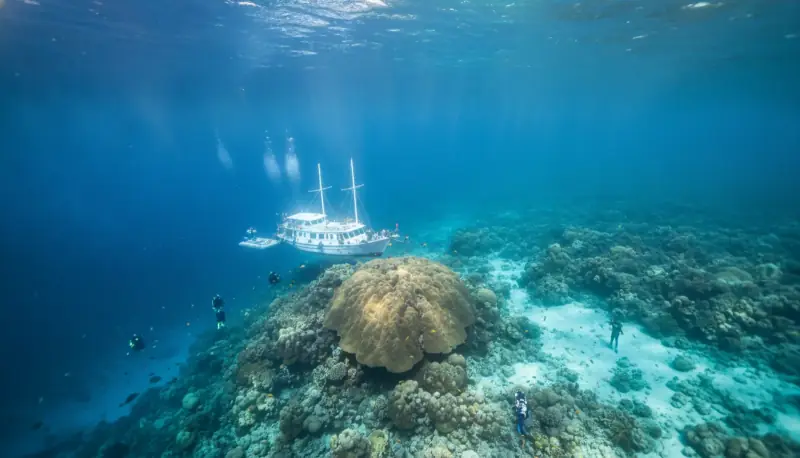
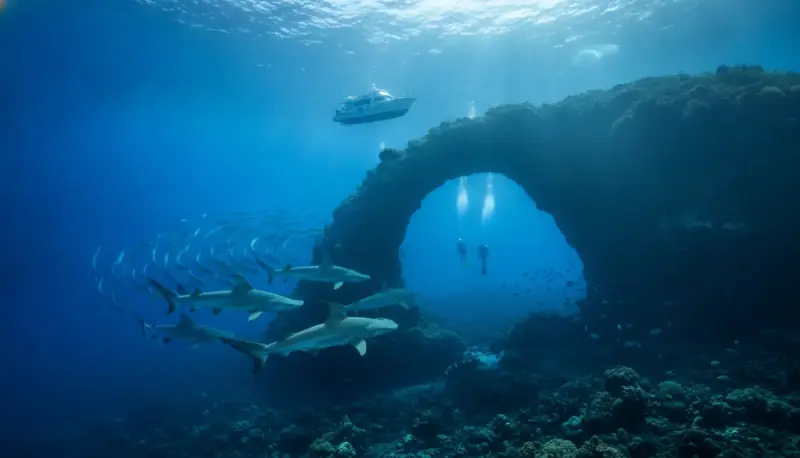
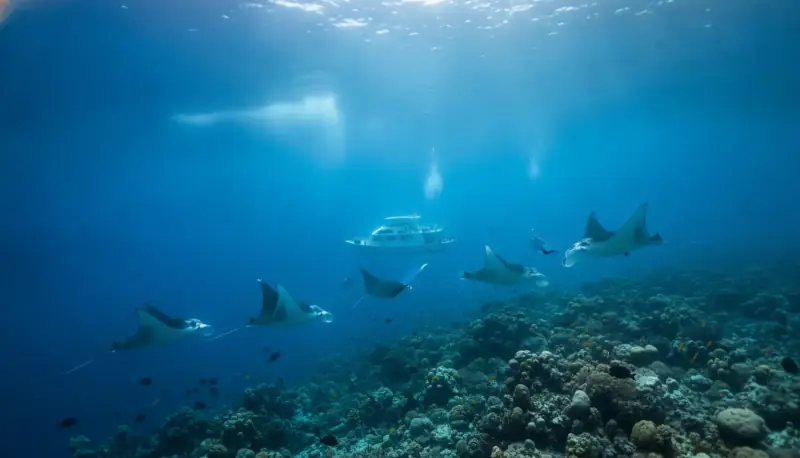
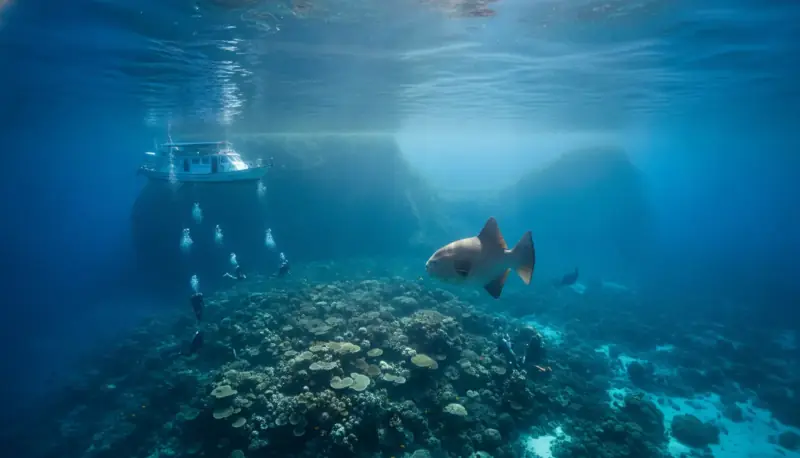
Bali packs an improbable amount of diving into a small island: a shore-dive wreck you can walk to, sunfish that rise out of the deep on cold upwellings, resident manta cleaning stations, world-class muck, and, when the east coast blows out, some of the clearest water in Indonesia on the other side of the island.
The answer to "when should I go?" depends entirely on which of those you're after, and the honest answer is that there is no bad month, only wrong regions in a given month.
The Two Seasons
Dry season (April–October). Calm seas, best surface conditions, peak visibility on the east coast, and the busiest boats. August is the driest month of the year.
Wet season (November–March). Warmer water, afternoon rain, lumpier crossings, and fewer people. It is not a write-off, it's the season to go northwest, which we'll come to.
Bali is only about 145 km across, but the water either side of it behaves completely differently, and that's the key to planning.
Sunfish (the "Mola Mola")
When: July to October, peaking August–September.
Where: Nusa Penida: principally Crystal Bay, plus Ceningan Wall, Gamat Bay and Toyapakeh. (Two corrections to the usual list: Blue Corner is on Nusa Lembongan, not Penida, and Manta Point is a manta cleaning station, not a sunfish site.)
What it actually is: the Bali sunfish is Mola alexandrini, the bump-head sunfish, not Mola mola, despite what every dive shop's sign says. They rise from deep water to be cleaned, not to feed, and the cold upwelling is what lets a deep-water fish tolerate shallow water at all.
And it is cold, much colder than you'll be told. Forget the 27°C basin-average sea temperature you'll see quoted; the upwelling that creates the season invalidates it. Operator ground truth in the mola months is 18–25°C at the surface, with 15–19°C below the thermocline, one operator recorded 13°C at Manta Bay in September. A 5 mm with a hood is the minimum; 7 mm is common.
This is a serious dive with documented fatalities from downcurrents. Operators sensibly require Advanced plus around 50 logged dives for the harder sites. Read our full Nusa Penida sunfish guide before you book it.
Manta Rays
When: the cleaning stations at Manta Point are resident year-round, so this is about sea state, not sightings. Sighting rates actually peak around May.
The counterintuitive bit: Manta Point sits on Penida's southwest coast, fully exposed to Indian Ocean groundswell, and that swell peaks May to September, biggest in July. Operators cancel around 1.6–1.7 m of forecast swell, and 4 m makes it undivable. In other words, mola season is the roughest manta season, and the two encounters you came for are in tension.
The genuinely calm crossings are the shoulders: roughly March–May and October–November.
The USAT Liberty, Tulamben
When: year-round, best April–November.
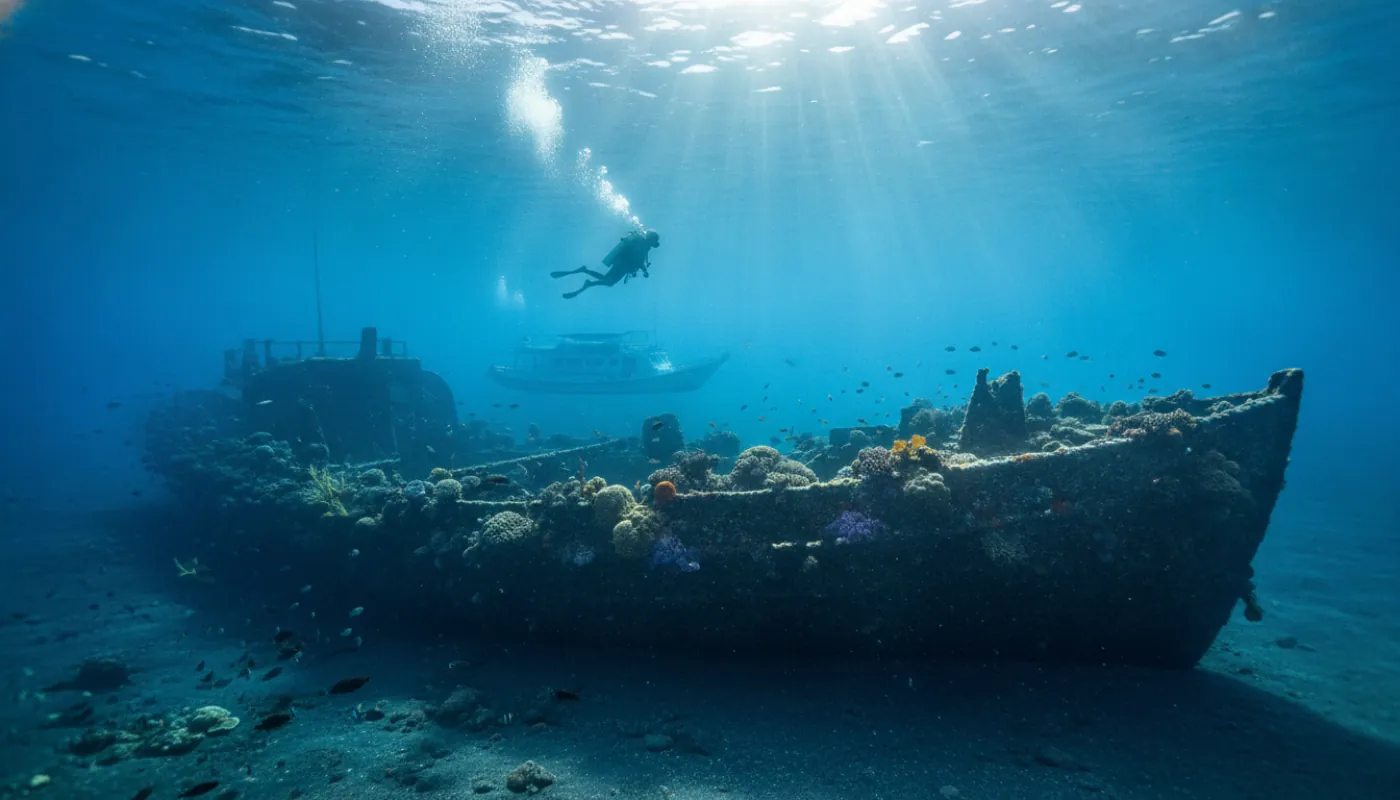
Bali's most-dived site, and the name is worth getting right: it's the USAT Liberty, a United States Army Transport, torpedoed in 1942 and pushed into the sea by the 1963 eruption of Mount Agung. (The USS Liberty is an entirely different ship, and has nothing to do with Bali.)
It's a shore dive: the wreck lies about 30 m off a black-pebble beach, in 5 to 30 metres, which means snorkellers, brand-new Open Water divers and technical divers all get something out of it. Visibility runs roughly 12–30 m, dropping after heavy wet-season rain.
Next door, Seraya and Amed deliver some of Asia's best muck diving.
When the East Coast Blows Out: Go Northwest
This is the section most Bali guides forget, and it turns the wet season from a problem into a plan.
Menjangan Island, in West Bali National Park, is the most sheltered diving on the island: walls, superb visibility (30 m routinely, and 50 m+ around October–November), and calm water when Penida is unmanageable. Pemuteran on the north coast and Secret Bay (muck, and genuinely strange) round out the region.
If you're coming in November through March, don't cancel, reroute. Northwest Bali is the answer to the wet season.
Month by Month
| Month | Conditions | Go for |
|---|---|---|
| Jan | Wet, quiet | Tulamben macro; Menjangan |
| Feb | Wet, fewest visitors | Menjangan, macro |
| Mar | Transitioning, calming | Mantas, one of the calmest crossings |
| Apr | Dry begins | Everything gets easy |
| May | Excellent | Manta sighting peak; Liberty; macro |
| Jun | Excellent, cooling | Macro, mantas (swell building) |
| Jul | Cold water arrives | Sunfish season opens. Manta crossings roughest |
| Aug | Driest month | Sunfish peak |
| Sep | Excellent | Sunfish peak |
| Oct | Warming, calming | Sunfish tail; mantas; Menjangan at its clearest |
| Nov | Wet returns | Mantas, macro, Menjangan |
| Dec | Wet, holiday crowds | Macro, Menjangan |
Fees
Three are in force and nobody mentions them:
| Fee | Amount |
|---|---|
| Nusa Penida MPA dive/snorkel permit | IDR 100,000 per foreign diver, per day |
| Bali tourist levy | IDR 150,000, one-time, on arrival |
| West Bali NP / Menjangan | IDR 200,000 per foreign visitor, per day |
Plus a small island port retribution (~IDR 25,000) on the Nusas.
The Bali-Specific Safety Rule Nobody Tells You
Do not drive up the mountain after diving.
This is Bali's signature decompression hazard and it catches out an astonishing number of divers. The classic itinerary (dive Tulamben or Amed in the morning, then head inland to Ubud, Kintamani, or the Bedugul–Munduk road), crosses altitudes of 1,300 to 1,500 metres.
DAN's altitude threshold is 610 metres. Driving to altitude after diving carries the same decompression risk as flying, and the same minimum surface intervals apply:
| Your diving | Wait before altitude or a flight |
|---|---|
| A single no-decompression dive | 12 hours |
| Multiple dives, or multiple days | 18 hours |
| Any decompression diving | 24 hours or more |
Plan your last dive day accordingly, and put the volcano at the start of the trip, not the end. The nearest 24/7 recompression chamber is at Kasih Ibu Saba, Gianyar.
Choosing an Operator
For Nusa Penida specifically, the bar is higher than elsewhere in Bali:
- They brief the current and the exit plan on the boat, including what the downcurrent response is, rather than "we'll see how it looks."
- They cap group size in mola season (four divers per guide, not six-plus).
- They enforce the certification and logged-dive minimum instead of waving it through.
- They can speak specifically to their safety record at Crystal Bay.
An operator who briefs drift entry, lost-buddy procedure, and which way the current bends at the cleaning station before you splash is telling you they've thought about it. One who doesn't has also told you something.
Planning a trip? Browse the Indonesia destinations directory for a vetted shortlist of operators in the region.