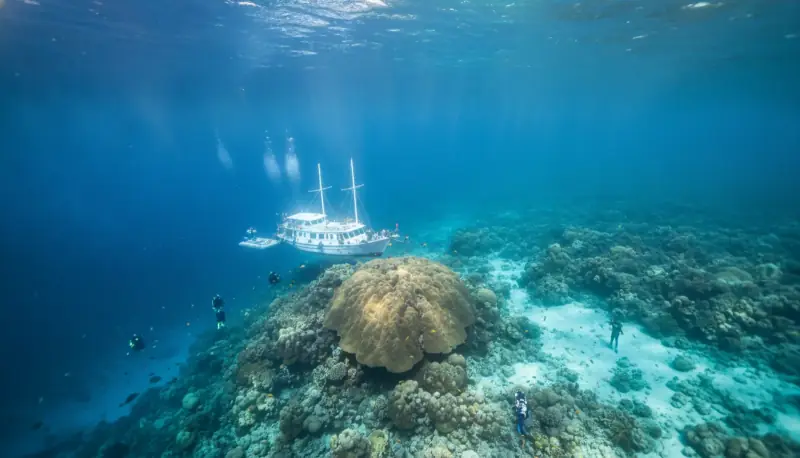
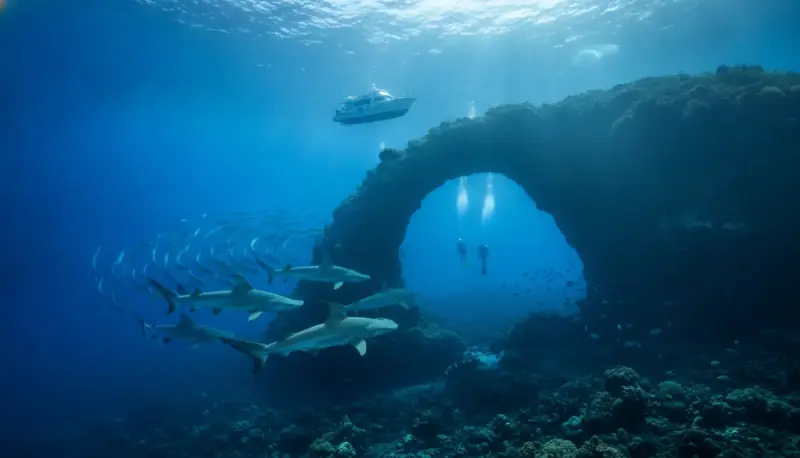
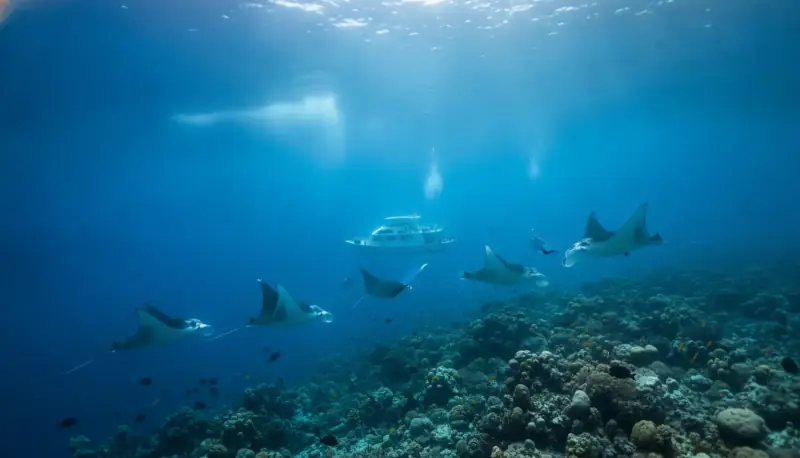
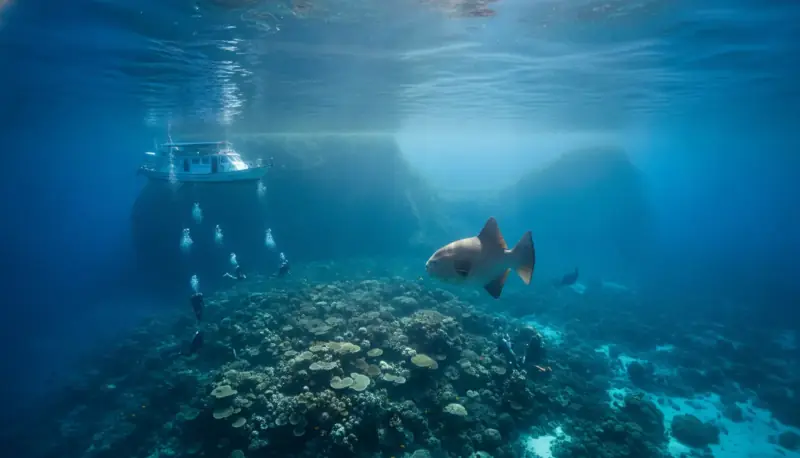
Oslob, on the southern coast of Cebu, offers something almost nowhere else can: a whale shark encounter that is close to guaranteed, on almost any morning of the year.
It offers that because the sharks are hand-fed. Everything else about Oslob (the reliability, the crowds, the ethics, and the reason a lot of experienced divers won't go), follows from that one fact.
This guide gives you the full picture, including the parts the tour operators don't lead with, so you can decide for yourself.
What Oslob Actually Is
Since 2011, local operators at barangay Tan-awan have provisioned whale sharks daily, feeding them sergestid shrimp from small paddle boats in the shallows. The sharks learned, stayed, and now a resident group turns up to be fed each morning.
This is not a natural aggregation. It is not a plankton bloom that happens to draw animals in. It is a feeding station, and the encounter you buy is a managed one.
Two things follow immediately, and both contradict what most guides tell you:
The sharks are not giant adults. Oslob's group is overwhelmingly juvenile males, measured at 2.5 to 9 metres with a mean length of about 5.5 m. Of 158 individuals photo-identified in the published research, 82% were male and only four appeared sexually mature. The "10–12 metre adults" figure that circulates is simply wrong.
There is no meaningful season. Because the sharks are fed, sighting rates run at roughly 97–99% year-round. Any guide that gives you a "peak season" for Oslob has misunderstood the entire premise. What does vary is the weather, and here the usual advice is backwards:
| Window | Conditions |
|---|---|
| December–May (dry season) | The good months. Calm seas, best visibility (25 m+), with March–May the pick |
| June–November (wet/typhoon season) | Rougher, wetter, more cancellations |
Water sits at 26.5–29.5°C year-round. A 3 mm suit is plenty; many people wear nothing but a rashguard.
The Research: What Provisioning Does to the Sharks
This is the section that should decide your trip, so here are the actual findings rather than a vague gesture at "controversy."
Injuries. 95% of the whale sharks identified at Oslob carry scars, against 27% at Ningaloo in Australia, a non-provisioned site. 83% show scarring or open sores on the head, mouth and fins, from contact with the feeder boats and with tourists. The most habitual individuals get struck most often.
Behavioural change. Sharks with longer histories at the site show reduced avoidance responses to being touched and to boat contact, they have learned not to flinch. Many have learned a conditioned vertical feeding posture, and some arrive up to half an hour before the feeders do.
Disrupted migration. Whale sharks are a highly migratory endangered species. Provisioning has turned nine individuals into year-round residents of Oslob and extended the stays of seasonal visitors, displacing the natural foraging and movement that the species depends on.
Reef damage. The interaction area shows up to eight times more coral bleaching and two to five times lower coral density than control sites.
And this is the part most "responsible tourism" advice gets wrong. You will often be told to simply pick a careful operator. The research says that doesn't work: minimum-distance compliance at Oslob collapsed from 21.4% in 2012 to 3.4% in 2014, in-water observation found roughly 97% of tourists breaching the minimum distance, and boat counts around a single shark have reached about 40. Non-compliance at Oslob is systemic to the site, not a matter of choosing a better boat. A conscientious operator cannot give you a compliant encounter in that crowd.
The Large Marine Vertebrates Research Institute Philippines (LAMAVE), which produced much of this research, has suspended its Oslob programme, citing stakeholder unwillingness to reform the management of the site. WWF-Philippines' position is that the feeding modifies the natural behaviour of a migratory species and should stop or be substantially reduced, and it explicitly directs visitors to Donsol instead.
The Case For It
It would be dishonest to leave it there, because there is a real argument on the other side.
Oslob employs a community that previously had few economic alternatives, and a living whale shark generates far more income than a dead one. The Philippines banned commercial whale shark hunting in 1998, and Oslob gives the animal a tangible local value that helps keep that ban politically durable. Some conservationists regard a regulated feeding site as a lesser evil than unmanaged exploitation.
Others, including a large share of the marine biologists who have studied it, think the welfare costs are simply too high, and that feeding wild megafauna for tourism is the wrong model regardless of the economics.
That is a genuine disagreement among people who care about the animals. What isn't in dispute is the data above.
The Wild Alternatives
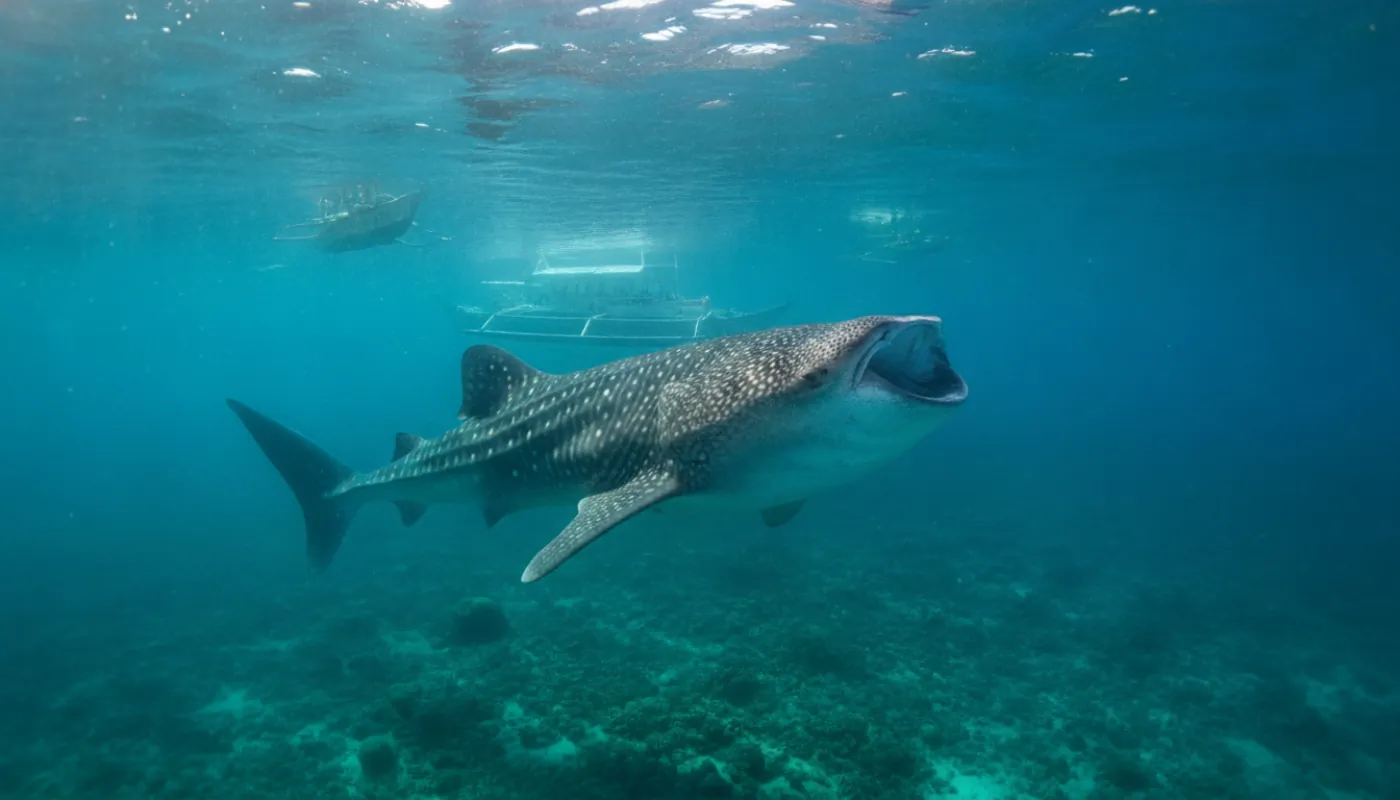
If you want to see a whale shark on its own terms, you have two good options in the Philippines.
Donsol (Sorsogon, in Bicol on Luzon) is the flagship non-provisioned encounter, wild, migratory animals located by spotter boats. Season runs roughly November to June, peaking February to May. Note two things: it is snorkel-only by law (scuba with whale sharks is prohibited there, precisely to protect the animals), and it is not "a few hours north of Cebu", you fly to Legazpi and drive about 90 minutes. Donsol's own economics are the strongest argument against Oslob's: it rose from a fifth-class to a first-class municipality on wild interactions.
Southern Leyte (Sogod Bay / Pintuyan) offers a wild seasonal aggregation, roughly November/December to May, with a fraction of the traffic.
Both trade guaranteed sightings for encounters that carry none of Oslob's costs. Whale sharks are Endangered on the IUCN Red List, and where you spend your money is itself a conservation decision.
If You Go to Oslob Anyway
Plenty of people will, and going in informed is better than going in blind.
The fees (municipal rates, and they are fixed, the interaction is run by the local government, not by your dive shop):
| Local | Foreign | |
|---|---|---|
| Snorkel interaction | ₱500 | ₱1,000 |
| Scuba interaction | ₱1,000 | ₱1,500 |
| Environmental fee | ₱100 | ₱100 |
Dive gear and a guide are extra: typically ₱1,500–4,000 per dive on top. Scuba is permitted for certified divers, who work at around 10–15 m beneath a 5–15 m site and may not position themselves below the sharks.
The reality of the visit:
- Getting there: fly to Cebu, then about 3 hours by private car (4 by public bus) for the ~130 km south. It is not a two-hour drive, and people miss their slot believing it is.
- Timing: the interaction runs 6:00 AM to 12:00 PM, with registration closing at 11:00. Go at dawn.
- The briefing is a mandatory government orientation at the municipal Briefing Center in Tan-awan, not at a dive shop.
- The boat ride is minutes. The feeding zone is roughly 50 m off the beach, reached by paddle boat.
- You get one 30-minute slot. That's the hard cap per ticket. Not an hour, not two encounters.
- Caps in the water: six snorkellers and four scuba divers per shark.
The rules, which you should follow even though almost nobody does:
- Stay at least 4 metres from the head and 6 metres from the tail (some official guidance says 5 m at the head).
- Never touch. No flash photography. No sunscreen in the water.
- Approach from the side, never head-on, and never swim beneath the animal.
The Honest Summary
Oslob will show you a whale shark. It is close, it is certain, and for many people it is the most extraordinary thing they've ever been in the water with.
It will also show you a juvenile endangered animal that has been taught to queue for breakfast, in a crowd where nearly every tourist is closer than they're allowed to be, carrying scars from the boats.
Both of those are true at once. Read the numbers above, decide which one you're willing to be part of, and if the answer is "neither", go to Donsol.