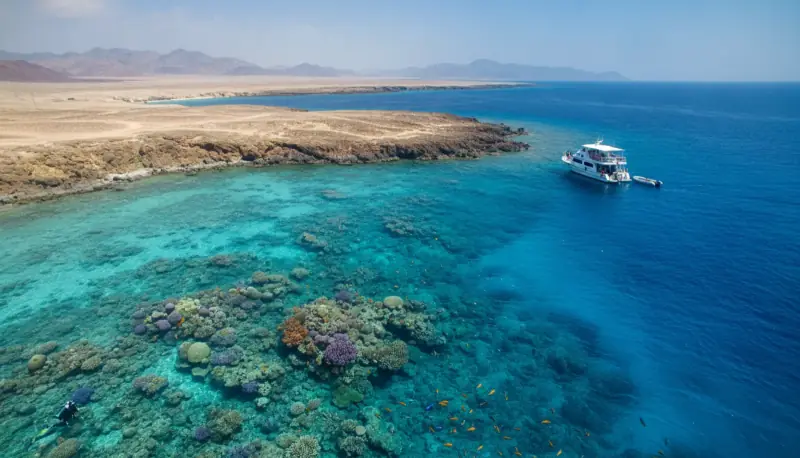
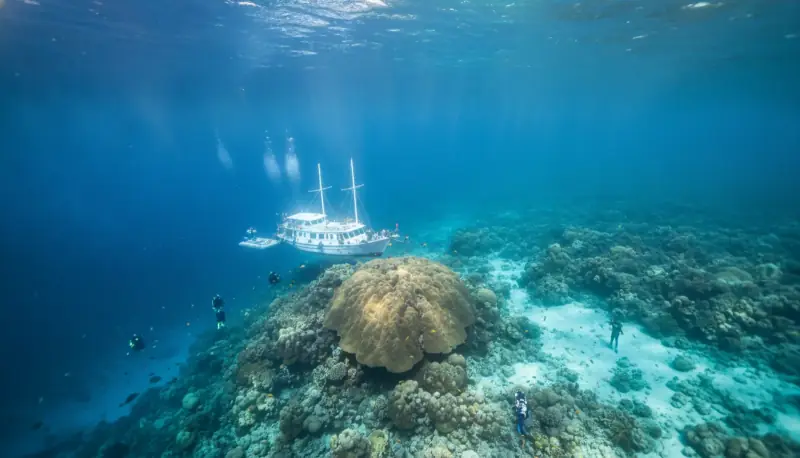
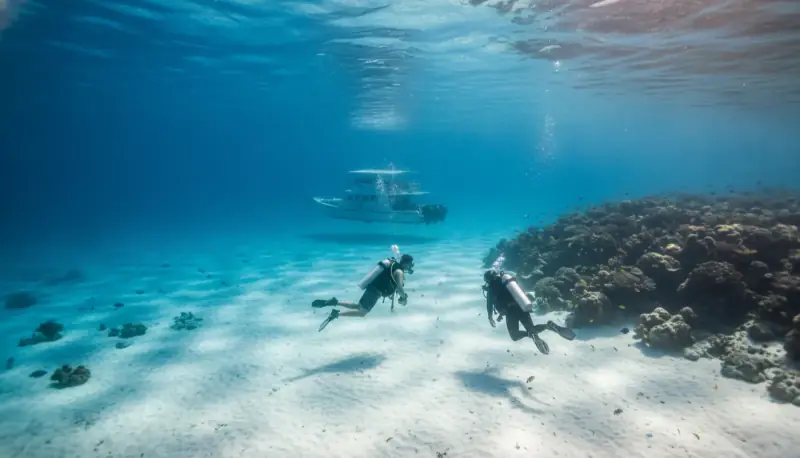
The Great Barrier Reef runs roughly 2,300 kilometres down Australia's northeast coast, which is a large enough canvas that "when should I go?" has several right answers depending on what you're actually chasing. Clarity, mantas, minke whales, and coral spawning each have their own window, and two of them are in opposite halves of the year.
Here's how to pick.
The Quick Answer
| If you want… | Go |
|---|---|
| Best visibility and settled seas | June–October (dry season, southeasterly trades) |
| Dwarf minke whales | June–July only, and only on a Ribbon Reefs liveaboard |
| Manta rays | The cool months, roughly June–September (peak winter) |
| Coral spawning | The nights after the November full moon (outer reefs); October for inshore |
| Warmest water | January–February, but it's also the wet, murky, stinger-heavy end of the year |
Dry Season: The Default Right Answer
May through October is when the reef behaves. High pressure dominates, the southeasterly trades are predictable, swells stay manageable, and liveaboards actually run their planned itineraries instead of improvising around the forecast. Visibility is at its best, and the deep blue Coral Sea water pushes in over the coastal murk.
Water is cooler, but nothing like as cold as some guides claim:
| Month | Water temp |
|---|---|
| May | ~26°C |
| June | 24–25°C |
| July | 22–24°C |
| August | 22–25°C, the coolest of the year |
| September | ~23°C |
| October | ~26°C |
Operators supply a 3 mm full-length suit as standard; take a 5 mm if you're doing four dives a day or going deep. You will not encounter 21°C water on the Great Barrier Reef.
One booking note: Australian winter school holidays run late June to mid-July, not May, and that's the demand spike to plan around, alongside European holidays in July.
June–July: Dwarf Minke Whales
This is the reef's best-kept secret and the single strongest reason to pick a specific month.
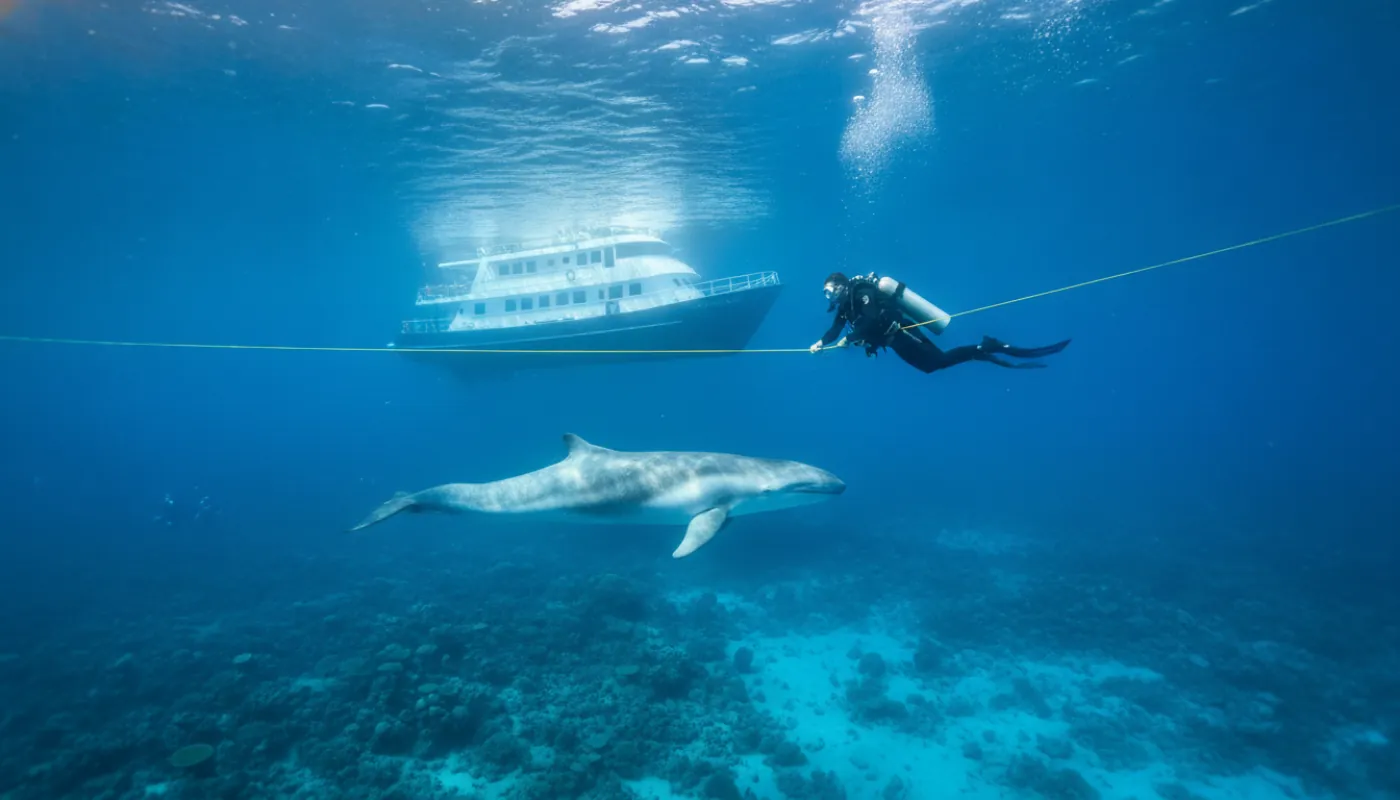
For a few weeks in June and July, dwarf minke whales gather on the Ribbon Reefs, and this is the only place in the world where you can legally get in the water and swim with them. The encounters run on capped GBRMPA permits, they are liveaboard-only (typically a minimum three-night trip out of Cairns), and the whales are curious enough to approach the boat and stay for hours.
Any guide that describes June and July as a marine-life trade-off for good visibility has this exactly backwards. It's the headline act.
Book early. June carries a premium, not a discount, precisely because of the whales.
The Cod Hole, Year-Round
The Cod Hole, on Ribbon Reef #10, is the reef's signature encounter dive: a gentle cleaning-station site where resident giant potato cod, some topping 100 kg, come to inspect divers at arm's length.
The cod are residents, so timing is forgiving. What the dry season buys you is the calm, clear water that makes it the relaxed, photograph-everything dive it's famous for.
Manta Rays: Winter, Not Autumn
Be careful here, because this is the most commonly inverted fact about the reef.
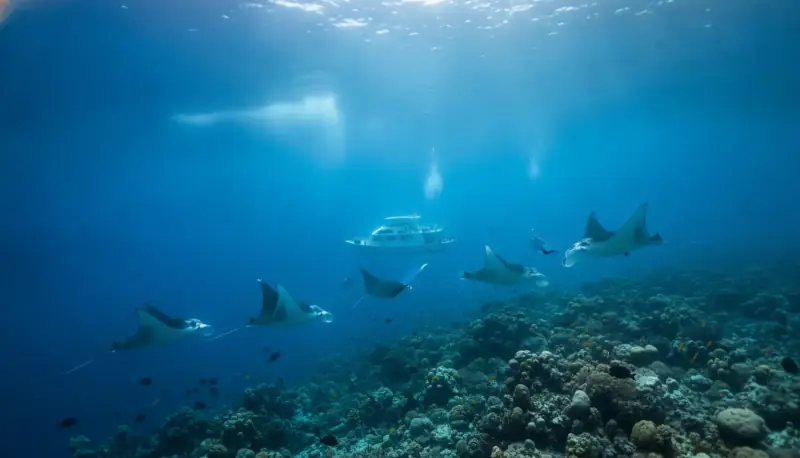
Manta aggregations peak in the cool months, roughly June to September. Lady Elliot Island, at the reef's southern end, bills itself as the "Home of the Manta Ray" and sees its largest gatherings in the depths of winter; Coral Sea operators report mantas from around April through October.
They do not peak in a warm March-to-May "shoulder season," and any explanation that has warming water driving an autumn manta peak has the mechanism upside down. If mantas are the goal, go in winter, the same trip that gets you the best visibility.
Coral Spawning: One to Six Nights After the Full Moon
The reef's great annual event, and it runs on the moon rather than the calendar.
Inshore reefs typically spawn after the October full moon. The outer reefs off Cairns and Port Douglas, the ones most divers visit, typically spawn one to six nights after the November full moon, though in some years it slips into December.
Expect a visibility hit (plankton), and expect it to be worth it: night dives during spawning are a slow underwater blizzard of gametes, with every fish on the reef out feeding in it. The reef does not spawn uniformly, so this is a trip you plan months ahead with an operator who knows their sites.
Stinger Season: Read This Before You Book
From roughly November to May, north Queensland waters carry box jellyfish and Irukandji. This is not a footnote; Irukandji are tiny, they pass straight through stinger nets, and the sting can be serious enough to hospitalise.
The mitigation is simple and universal: operators supply full-body stinger suits at no charge, and you wear one. Every reputable boat does this as a matter of routine during the season. Wear it, and don't get in the water without it on a stinger-season trip.
What Reef Health Actually Looks Like Right Now
An honest guide has to say this, because the reef is not the reef of the postcards and pretending otherwise sets divers up for a shock.
The Great Barrier Reef has suffered mass bleaching events in 2016, 2017, 2020, 2022, 2024 and 2025. Following the 2024 event, the Australian Institute of Marine Science recorded the largest annual decline in coral cover in the 39 years it has been monitoring the reef across two of its three regions, northern cover fell from about 39.8% to 30.0%, central from 33.2% to 28.6%, and southern from 38.9% to 26.9%, with individual reefs near Lizard Island losing up to 70%.
What that means for your trip: the reef is neither pristine nor dead. It is a vast, damaged, still-extraordinary ecosystem, and it varies enormously site to site, the outer reefs and Coral Sea sites generally show better than inshore. Go, and go with your eyes open. The diving is still world-class, and reef tourism is one of the arguments for protecting it.
Fees, Costs, and Liveaboard Reality
The Environmental Management Charge. Every visitor pays GBRMPA's reef tax: AUD $8.50 per person per day for visits over three hours, $4.25 for a part-day trip of three hours or less. It's usually collected by your operator and it's not optional.
Liveaboard pricing. Real 2026 rates from established Cairns operators: a 3-night Cod Hole / Ribbon Reefs trip from about AUD $2,355, a 4-night Coral Sea / Osprey Reef trip from about AUD $2,995, and a 7-night from around AUD $4,549. So a typical five-day trip lands near AUD $3,000. Quote your budget in the right currency and ignore any guide promising a June discount, June is minke season and it's priced accordingly.
The outer Coral Sea is a different tier of diving. Osprey Reef and Holmes Reef are deep, current-exposed, open-ocean walls reachable only on multi-day liveaboards, and operators expect Advanced certification or a logged-dive minimum. Hammerheads are occasionally seen out there, but there is no reliable schooling aggregation on the Coral Sea comparable to Cocos or Malpelo, and you shouldn't book a trip expecting one.
Land-based diving from Cairns runs year-round. Day boats to the closer sites go out almost every day of the year; it's the distant sites and the wet-season afternoons that get rescheduled.
So When?
If you want one answer: June or July, on a Ribbon Reefs liveaboard. You get the year's best visibility, the settled dry-season seas, the Cod Hole, mantas moving into their winter peak, and the only legal dwarf minke whale swim on earth, in a single trip.
If you want warm water and a coral spawning night dive, come in November instead, take the visibility hit, and wear the stinger suit.