Skip to content
Top-rated outdoor gear, ranked

Best Of 2026

Best Scuba Diving Wetsuits of 2026

Our top 10 picks, independently ranked. Budget to premium.

Choosing a wetsuit is the single most consequential comfort decision a recreational diver makes after the regulator. Get the thickness, fit, and seam construction right and you'll log longer, happier dives; get them wrong and you'll either shiver through your safety stop or fight a baggy suit that flushes cold water on every kick. The good news in 2026 is that the gap between a $150 entry suit and an $800 flagship is no longer about whether you stay warm at all: it's about how long you stay warm, how easily the suit dons and doffs, and how many cold-water flushes you tolerate over a two-tank day.

The market splits cleanly along water temperature. A 3mm full suit (or even a 2mm shorty) covers tropical Caribbean, Hawaii, and warm-quarry diving above roughly 75°F. A 5mm is the true workhorse for most North American and Mediterranean diving in the 65–75°F band, and a 7mm or semi-dry takes over below 65°F before a drysuit becomes the smarter call. We've deliberately spanned all three thicknesses below so you can match the suit to where you actually dive rather than to a single 'best' number.

This guide is written for recreational divers, not spearos or technical wreck divers, so we weighted dive-specific features (back-zip convenience, knee and shoulder reinforcement, neck and wrist seals that limit flushing, and stretch that doesn't fight you on the boat), over surf-oriented flexibility. Prices listed are realistic current US street ranges and move with sales, so treat them as guidance for navigating the low end versus the high end, not as quotes.

At a glance

#ProductPrice
1$300–$340
2$169–$210
3
Proteus II 5mm

Fourth Element

$700–$805
4$230–$300
5$400–$450
6$550–$700
7$560–$600
8$120–$160
9$110–$150
10$60–$80
Definition Steamer 5mm
Best OverallMid-range

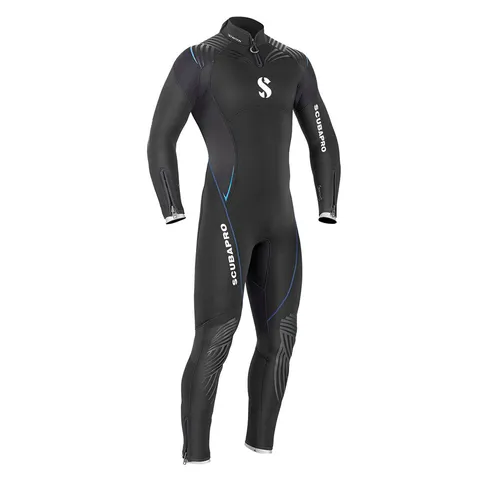
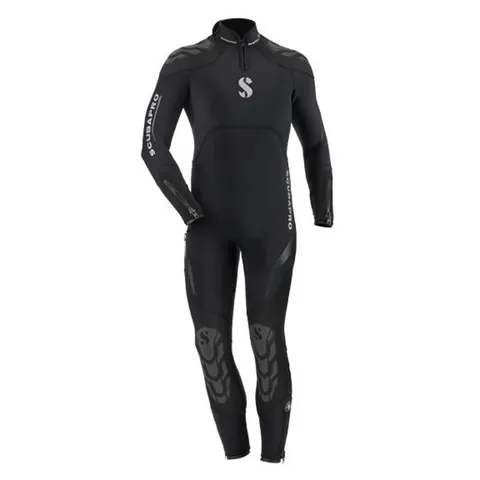
1. Definition Steamer 5mm

Scubapro

$300–$340

One of the very few suits engineered exclusively for scuba, with a body-mapped 3D cut, dive-specific reinforcement, and wrist/ankle zips that make a 5mm easy to don. It hits the sweet spot of warmth, fit, and price for the average recreational diver.

Best for: Divers who want one dive-specific 5mm suit for temperate water

Purpose-built for diving with abrasion-resistant shoulders and knee pads · Body Map 3D cut fits like a glove and limits flushing · Wrist and ankle zippers make a 5mm easy on and off

Pricier than generic nylon-lined 5mm suits · Snug body-mapped cut is less forgiving of in-between sizes

Castoro 5mm Full Wetsuit
Best ValueBudget

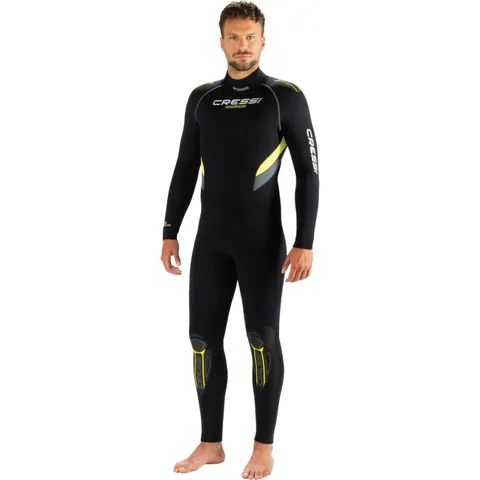
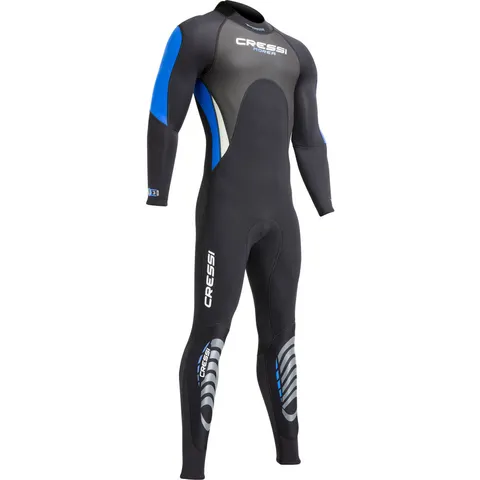
2. Castoro 5mm Full Wetsuit

Cressi

$169–$210

A traditional double-lined 5mm one-piece with a tough YKK back zip that has been the default first 'real' dive suit for years. It delivers honest temperate-water warmth for well under half the price of a premium suit.

Best for: New divers buying their first dedicated 5mm suit on a budget

Excellent warmth-per-dollar for temperate water · Durable double-lined neoprene and YKK back zip · Widely stocked in men's and women's cuts

Stiffer and less stretchy than pricier neoprene · Basic seals flush more than premium suits

Proteus II 5mm
Best PremiumPremium

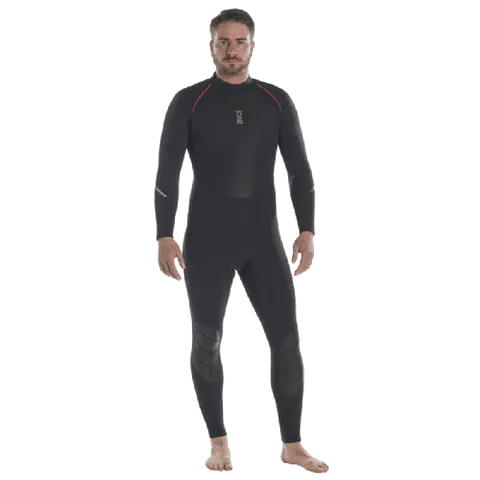
3. Proteus II 5mm

Fourth Element

$700–$805

Frequently cited as the warmest, best-sealing 5mm wetsuit on the market and the benchmark other dive suits are measured against. The Hydrolock neck seal and Glideskin wrists keep flushing to a minimum on long dives.

Best for: Divers who want maximum 5mm warmth and sealing and will pay for it

Class-leading warmth from Hexcore core linings · Hydrolock neck and Glideskin wrist seals minimize flushing · Eco-friendly limestone neoprene and water-based glues

Premium price, among the most expensive 5mm suits · Tight Hydrolock neck seal takes effort to get into

Thermoprene Pro 5mm
Editor's PickMid-range

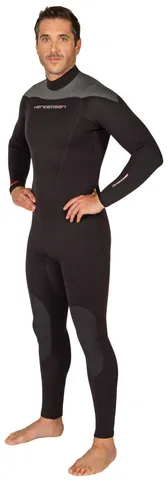
4. Thermoprene Pro 5mm

Henderson

$230–$300

Henderson's 250%-stretch update to its hugely popular Thermoprene line, with minimized double-glued blind-stitched seams and a 10-year warranty that signals real durability. A flexible, warm mid-tier all-rounder that holds its shape when wet.

Best for: Divers wanting a flexible, long-lasting temperate-water 5mm

High 250% stretch for easy donning and mobility · Holds shape when wet, doesn't go baggy like cheaper suits · Backed by a 10-year limited warranty

Street price varies widely by retailer and sale · Less dive-specific reinforcement than the Scubapro Definition

Everflex 5/4mm Steamer
Mid-range

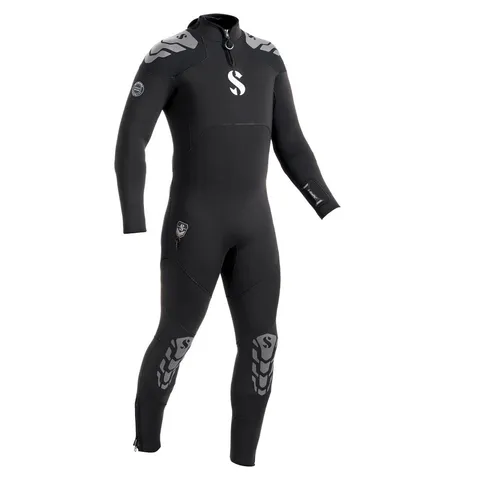
5. Everflex 5/4mm Steamer

Scubapro

$400–$450

A split-thickness 5/4mm that puts insulation over the core and thinner, stretchier neoprene on the limbs, giving it some of the best mobility in its class. A great pick for divers who feel boxed in by uniform 5mm suits.

Best for: Divers prioritizing mobility in temperate water

5/4 split thickness balances warmth and flexibility · Very stretchy and comfortable for long dives · Established, well-reviewed dive suit

Slightly less core warmth than a uniform 5mm · Mid-to-high price for a non-eco suit

Reactive 7mm
Premium

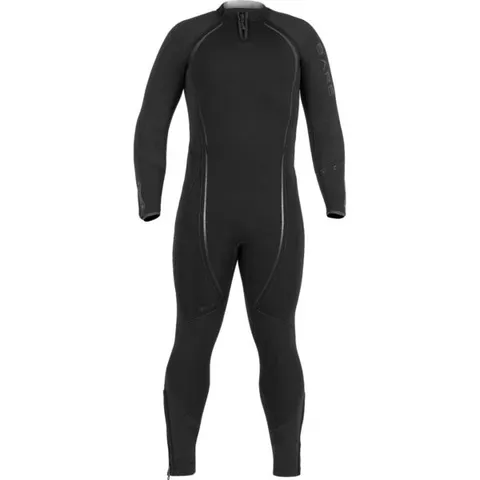
6. Reactive 7mm

BARE

$550–$700

Widely regarded as the warmest, most comfortable 7mm coldwater wetsuit you can buy, thanks to a full-body graphene Omnired infrared lining. Surprisingly easy to don for its thickness, it extends bottom time when water drops below 65°F.

Best for: Coldwater recreational divers who want maximum 7mm warmth

Full-body graphene Omnired lining for exceptional warmth · Easy to don and doff for a 7mm · Flexible enough not to restrict movement underwater

Expensive · No integrated hood

Everflex Yulex Dive Steamer 5/4mm
Premium

7. Everflex Yulex Dive Steamer 5/4mm

Scubapro

$560–$600

The plant-based Yulex version of the Everflex swaps petroleum neoprene for natural rubber that stretches in ways conventional foam doesn't, all while keeping the warm-core/flexible-limb 5/4 layout. The pick for divers who want flagship comfort with a lighter footprint.

Best for: Eco-minded divers wanting a high-stretch temperate suit

Plant-based Yulex foam, neoprene-free and more sustainable · Excellent stretch and mobility · Warm 5/4 core-and-limb construction

Premium price over the standard Everflex · Eco materials add cost without a big warmth gain

Morea 3mm Full Wetsuit
Budget

8. Morea 3mm Full Wetsuit

Cressi

$120–$160

A 3mm one-piece with Ultraspan neoprene on the arms and legs for easy donning and rubberized neoprene over the chest for warmth, an affordable, flexible full suit for warm-water diving and snorkeling.

Best for: Warm-water and tropical divers wanting full-limb coverage

Ultraspan limbs make it easy to don and very flexible · Warm rubberized chest panel for a 3mm · Affordable warm-water full-suit option

3mm only, too thin for temperate water · Budget seals flush more than premium suits

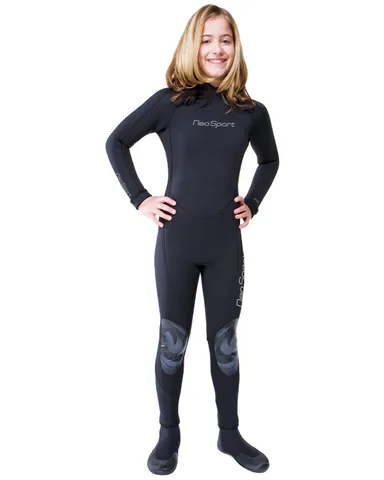
NeoSport 3mm Full Wetsuit
Best BudgetBudget

9. NeoSport 3mm Full Wetsuit

NeoSport

$110–$150

A no-frills, anatomically cut 3mm neoprene suit that consistently lands on affordable-wetsuit lists for warm-water diving, snorkeling, and watersports. Comfortable and flexible for the money, with a handy key pocket.

Best for: Budget-focused warm-water divers and travelers

One of the lowest prices for a real 3mm dive suit · Flexible, anatomical fit with adjustable collar · Versatile across diving, snorkeling, and watersports

Basic construction and seals · 3mm only, strictly a warm-water suit

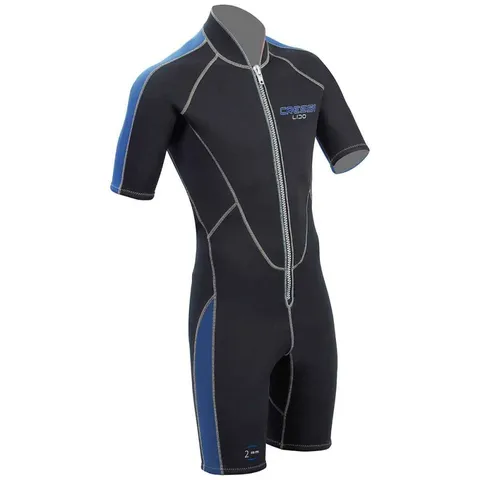
Lido 2mm Shorty Wetsuit
Budget

10. Lido 2mm Shorty Wetsuit

Cressi

$60–$80

A front-zip 2mm shorty that's the cheapest way to add a little thermal and abrasion protection for tropical diving and snorkeling. Effortless to put on and pack, it's a smart second suit for warm Caribbean and Hawaii trips.

Best for: Tropical divers and snorkelers wanting a cheap packable layer

Very inexpensive and travel-friendly · Easy-entry front zipper · Good light protection for tropical water and snorkeling

2mm shorty: minimal warmth, warm water only · Exposed arms and legs offer no limb insulation

How we choose

We ranked by overall recommendation for a typical recreational scuba diver (versatility across common water temperatures, fit and seam quality, dive-specific features, and value), rather than by price or by lab-warmth alone. We cross-referenced hands-on testing from ScubaLab, DIVEIN, Diving Squad, and Scuba.com against manufacturer specs and diver feedback on ScubaBoard, then organized the field into three tiers: budget suits (roughly $60–$210, nylon-lined neoprene, solid warmth and the best dollar-for-warmth value but stiffer and less refined seals); mid-tier suits ($220–$450, higher-stretch neoprene, glued-and-blind-stitched seams, dive-specific reinforcement and better seals); and premium suits ($500–$805, the warmest linings, the best neck/wrist sealing, and eco-friendly or graphene-lined construction for divers who spend hours in cold water or simply want the best). We accept no payment from manufacturers or retailers for placement; affiliate links may earn a commission but do not influence rank, and every pick was selected independently on merit.

Common questions

Match thickness to water temperature, not air temperature. As a rough rule: 2–3mm for tropical water above ~75°F (Caribbean, Hawaii, summer quarries), 5mm for temperate 65–75°F diving (most of the US coast, the Med, the Great Lakes in summer), and 7mm or a semi-dry for cold water below ~65°F. Cold tolerance is personal, if you run cold, size up a thickness. Below about 50°F most divers move to a drysuit.

Back-zip dominates scuba because it's far easier to don and doff solo and pairs naturally with a BCD. Front- and chest-zip suits seal a little better against flushing and are common in freediving and surfing, but they're fiddlier to get into. For most recreational divers a quality back-zip with a good zipper baffle is the right call.

Often yes, but with diminishing returns. A premium suit like the Fourth Element Proteus II or BARE Reactive buys you better neck and wrist seals (less cold-water flushing), warmer core linings, and higher stretch, which together extend comfortable bottom time. But a well-fitting $200 suit of the right thickness will keep you safe and reasonably warm. Fit matters more than price: a baggy premium suit is colder than a snug budget one.

Snug everywhere with no loose pockets: especially at the lower back, crotch, and behind the knees, where gaps trap water that the suit then has to reheat. You should be able to move your arms and squat, but the suit should feel firm. If you can pinch large folds of neoprene or feel water sloshing inside on a dive, it's too big and you'll be cold.

A single number (e.g. 5mm) is uniform thickness throughout. A split number like 5/4mm means thicker neoprene over the core (5mm) for insulation and thinner neoprene (4mm) on the arms and legs for flexibility. Split-thickness suits like the Scubapro Everflex trade a little warmth for noticeably better mobility.

For warmth and stretch they now perform on par with petroleum neoprene, the Scubapro Everflex Yulex and Fourth Element's limestone-neoprene Proteus II are genuinely high-performing suits. You pay a premium for the plant-based or lower-impact materials, so it comes down to how much you value the environmental angle versus the extra cost.

Some links are affiliate links, and we may earn a commission at no extra cost to you. It never affects our rankings.

In your pocket

Take every dive site with you.

Free, no account needed. Dive-site charts, coastal webcams, and your dive log in your pocket.

  • Every dive shop and charter in your pocket

  • Reefs, wrecks, and walls charted on the map

  • File a dive plan before a remote shore entry

  • Coastal and harbor cams before you make the drive

The Diving Hubs app dashboard

For operators

Run your dive business?
Launch your branded surface.

Get your own branded surface in the Diving Hubs app and a directory listing in minutes. Bookings, digital waivers, and your whole operation live in one cockpit.