Best OverallPremium
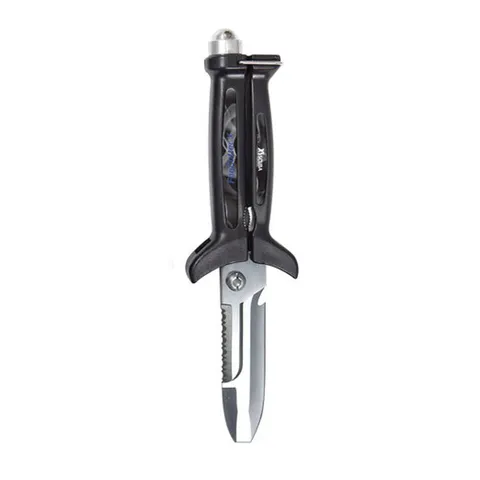
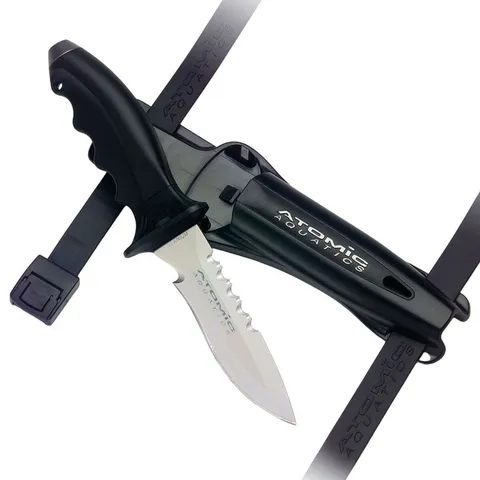
1. Atomic Aquatics Ti6 Titanium Knife (Blunt Tip)
Atomic Aquatics
$130–$165
Full-tang titanium, a secure locking sheath, and a shape that simply works. This is the knife we would hand a recreational diver who wants one tool to keep for a decade.
Best for: Divers who want one durable, low-maintenance blade for years of saltwater use.
Corrosion-proof full-tang titanium blade · Secure locking sheath with quick-adjust leg straps · Curved 4-inch edge plus an integrated line-cutting notch · Offered in both blunt and drop-point versions
Titanium holds an edge a little less long than hardened stainless · Costs more than a stainless knife that cuts nearly as well
Sources: amazon.com, scuba.com, atomicaquatics.com, gatetoadventures.com