Skip to content
Top-rated outdoor gear, ranked

Best Of 2026

Best Dive Computers of 2026

Our top 10 picks, independently ranked. Budget to premium.

A dive computer is the single most important piece of gear you own after life support. It continuously tracks your depth, bottom time, and ascent rate, then runs a decompression algorithm in real time to keep you inside safe no-decompression limits, replacing the rented rectangle most divers learned on with a device they actually trust. The good news for recreational divers in 2026 is that the floor has never been higher: even sub-$250 wrist units now run respectable algorithms, support nitrox, and have backlit displays that would have been flagship features a decade ago.

That abundance is also the problem. The market sprawls from $225 single-button "pucks" to $1,600 GPS dive smartwatches, and the listings you'll find on Amazon do nothing to explain why one costs five times another. The honest answer is that most open-water and advanced recreational divers are well served somewhere in the $250–$500 band, and that the jump to premium money buys color screens, air integration, rechargeable batteries, and smartwatch crossover, conveniences, not safety. A more expensive computer does not make you a safer diver.

This guide spans the full price spectrum on purpose, so you can see exactly what your money buys as you move up. We focused on no-decompression recreational diving on air and nitrox, the diving the vast majority of certified divers actually do, and called out which models scale into deeper, more technical territory if that's where you're headed.

At a glance

#ProductPrice
1
Peregrine

Shearwater

$450–$500
2$225–$290
3
Ocean

Suunto

$899–$1,200
4
Peregrine TX

Shearwater

$850–$1,110
5$225–$330
6
Geo 4.0

Oceanic

$430–$470
7$1,400–$1,600
8
Neon

Cressi

$430–$480
9
Zoop Novo

Suunto

$230–$300
10
Aladin A2

Scubapro

$440–$500
Peregrine
Best OverallMid-range

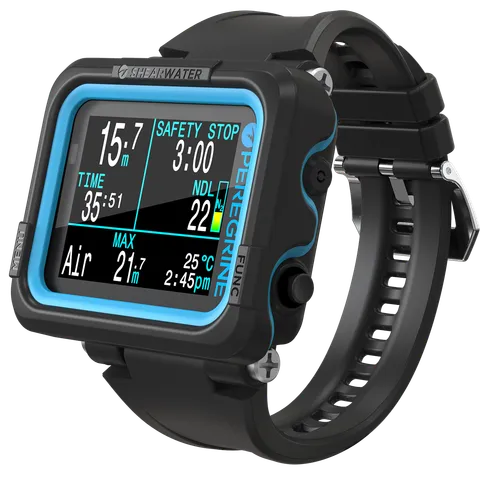
1. Peregrine

Shearwater

$450–$500

The benchmark recreational computer: a large, gorgeous color screen, dead-simple menus, the trusted Bühlmann GF algorithm, and a 30-hour rechargeable battery. It's what we'd put on almost any diver's wrist.

Best for: Any recreational diver who wants the clearest, most trustworthy display without overpaying.

Best-in-class readability, bright full-color LCD with huge digits · Bühlmann ZHL-16C with adjustable Gradient Factors · Genuinely intuitive two-button interface and Bluetooth log sync · Backed by Shearwater's tech-diving reputation and support

No air integration on the base model · Rechargeable battery means carrying a charge cable when traveling

Leonardo 2.0
Best BudgetBudget

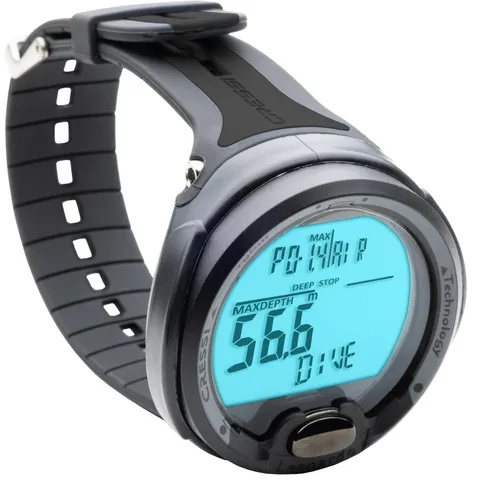
2. Leonardo 2.0

Cressi

$225–$290

The dive computer countless divers learned on, refreshed. One button, one big backlit display, nitrox support, and a user-replaceable battery for the price of a mask-and-fins combo.

Best for: New or budget-conscious divers who want their own reliable computer without overspending.

Extremely affordable and proven reliable across thousands of units · Foolproof single-button operation, ideal for new divers · User-replaceable battery, easy to service anywhere

Monochrome display lacks the polish of pricier units · Single-gas nitrox only; won't grow into technical diving

Ocean
Best PremiumPremium

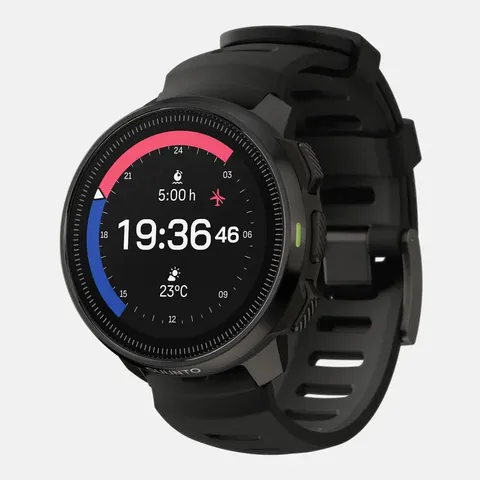
3. Ocean

Suunto

$899–$1,200

A true dual-purpose device: a stunning sapphire-protected AMOLED dive computer with optional wireless tank pressure, wrapped in a full GPS multisport watch you can wear every day.

Best for: Divers who want one premium device for both diving and everyday GPS-watch life.

Bright AMOLED touchscreen under sapphire crystal · Scuba, nitrox, multi-gas, gauge and freedive modes plus optional Tank POD air integration · Doubles as a complete GPS fitness and daily-wear watch · Long ~26-day watch / multi-dive battery life per charge

Premium price, and the transmitter is a costly add-on · Suunto's conservatism and app ecosystem won't suit everyone

Editor's PickPremium

4. Peregrine TX

Shearwater

$850–$1,110

Everything that makes the Peregrine great, plus wireless air integration and multi-transmitter support. The recreational-to-light-tech computer that buys you years of headroom.

Best for: Divers who want air integration now and room to grow into deeper diving later.

Adds wireless tank pressure to the beloved Peregrine platform · Same superb color screen and Bühlmann GF algorithm · Supports multiple transmitters and scales toward technical diving

Significantly pricier than the base Peregrine, especially with a transmitter · Air integration is more capability than many recreational divers need

Puck Pro+
Best ValueBudget

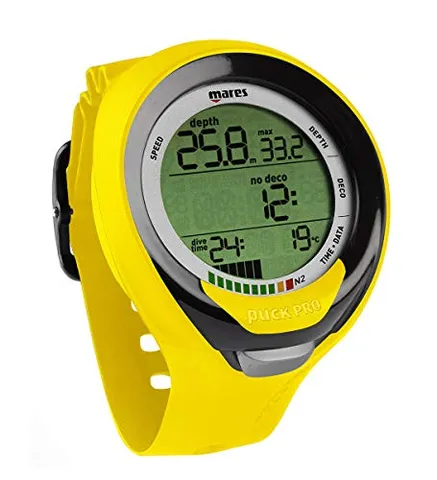
5. Puck Pro+

Mares

$225–$330

An ultra-flat, single-button workhorse with a big readable display and a battery you can swap yourself, arguably the most popular entry-level computer in the world for good reason.

Best for: Travelers and new divers who want a proven, serviceable computer at a low price.

Large, high-contrast backlit display that's easy to read at depth · Air, nitrox (to 99%) and gauge modes in a simple package · User-replaceable battery good for 200–300 dives · Bluetooth log download on the Plus version

Single-button menus take some learning · Monochrome screen and no air integration

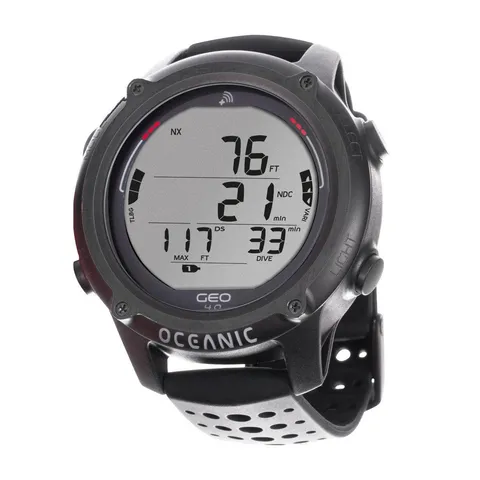
Geo 4.0
Mid-range

6. Geo 4.0

Oceanic

$430–$470

A slim watch-style computer with dual algorithms and a clean four-button interface that's equally at home on the dive boat and around town. A long-running recreational favorite.

Best for: Divers who want a wearable watch-style computer with adjustable conservatism.

Choice of two algorithms (Pelagic DSAT or Z+) for conservatism control · Compact watch form factor you can wear daily · Four-button layout is straightforward to navigate · User-replaceable battery

Monochrome segmented display feels dated next to color rivals · No air integration

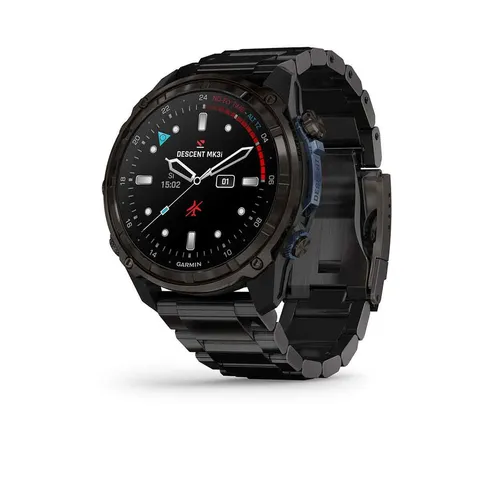
Descent Mk3i (51mm)
Premium

7. Descent Mk3i (51mm)

Garmin

$1,400–$1,600

The most capable dive smartwatch on the market: AMOLED display, DiveView maps, SubWave sonar messaging, air integration, and Garmin's full GPS-fitness ecosystem in one titanium package.

Best for: Gadget-loving divers who want one do-everything GPS smartwatch and dive computer.

Brilliant AMOLED screen with multi-gas, CCR and gauge support · SubWave acoustic air integration and diver-to-diver messaging · Best-in-class GPS, mapping and everyday smartwatch features · DiveView maps and dive-setup sharing

The most expensive option here by a wide margin · Far more watch and capability than recreational no-deco diving requires

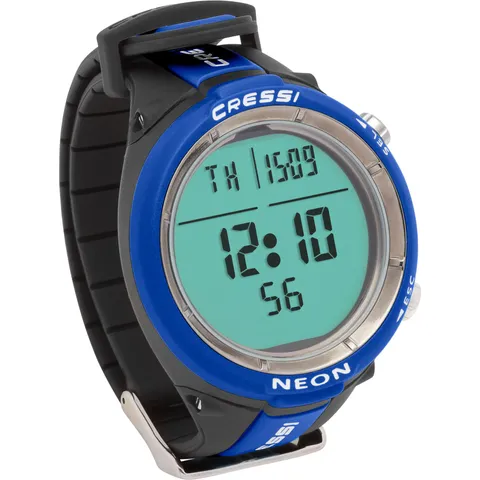
Neon
Mid-range

8. Neon

Cressi

$430–$480

A compact, modern watch-style computer with a clean two-button interface, color accents, and rechargeable battery, a stylish step up from Cressi's entry pucks for recreational and freedivers.

Best for: Recreational divers and freedivers wanting a compact, good-looking everyday computer.

Sleek, low-profile watch design suitable for daily wear · Simple two-button operation with backlit display · Air, nitrox and freedive modes; rechargeable battery

Cressi's RGBM runs conservative on repetitive dives · No air integration and limited tech-diving ceiling

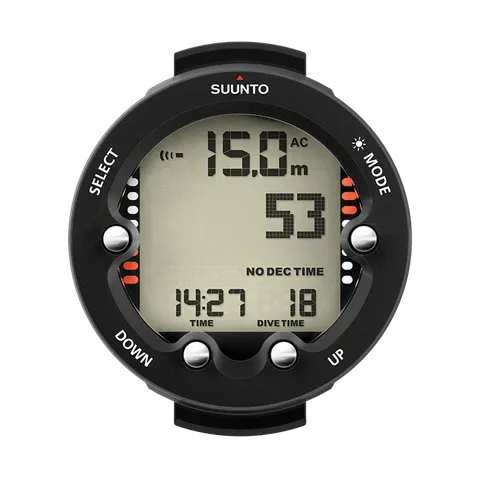
Zoop Novo
Budget

9. Zoop Novo

Suunto

$230–$300

A bulletproof, beginner-friendly classic: a huge dot-matrix display, intuitive four-button menus, and an extra-conservative algorithm that's reassuring for new divers.

Best for: New divers who prize a big, idiot-proof display and a conservative profile.

Very large, easy-to-read display · Logical four-button interface that's simple to learn · Conservative Suunto RGBM is forgiving for newer divers · User-replaceable battery

Bulky on the wrist and dated styling · Conservatism can shorten bottom time on repetitive dives

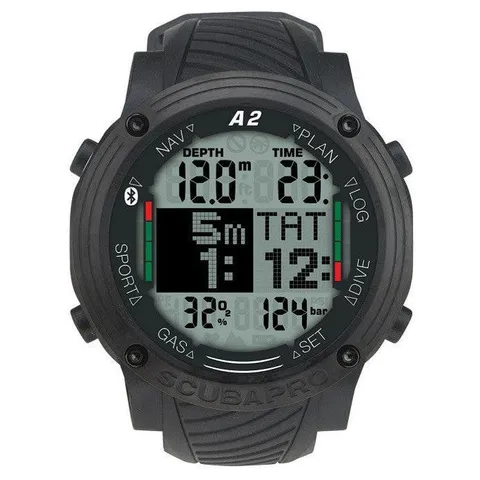
Aladin A2
Mid-range

10. Aladin A2

Scubapro

$440–$500

A compact watch-style computer that punches above recreational needs: Bühlmann ZHL-16C, optional wireless air integration, and a long list of modes including trimix and CCR for divers planning to advance.

Best for: Recreational divers who want a compact, serviceable computer with room to grow technical.

High-resolution hybrid matrix display, readable in poor conditions · Optional wireless air integration with true remaining bottom time · Supports scuba, gauge, apnea, trimix, sidemount and CCR · Long CR2450 battery life (up to ~2 years / 300 dives)

Menu system is less intuitive than the Shearwater Peregrine · Most of its advanced modes are overkill for pure recreational diving

How we choose

We selected and ranked these computers for everyday recreational scuba divers (open-water through advanced, diving air and nitrox within no-decompression limits), weighing display readability, algorithm and conservatism settings, ease of use, battery approach (user-replaceable vs. rechargeable), build quality, and real value at the street price. We grouped them into three tiers: budget (roughly $200–$330, simple single- or four-button pucks and watch-style units with user-replaceable batteries), mid ($430–$500, where you get sharper displays, better ergonomics, Bühlmann GF algorithms, and app connectivity), and premium ($850+, adding color AMOLED screens, wireless air integration, rechargeable batteries, and full smartwatch/GPS crossover). Rank reflects our overall recommendation for a typical recreational diver, not price, a $450 computer tops the list because it's what we'd hand most divers. This guide is editorially independent: we are not sponsored by any brand, accept no payment for placement or rankings, and selected every product on merit. Prices are street-price estimates for display only and shift with sales and retailer; some links are affiliate links that don't change what you pay or where a product ranks.

Common questions

No, air integration (a wireless transmitter on your first stage that streams tank pressure to the computer) is a convenience, not a safety requirement. It's genuinely nice to see remaining gas time on your wrist instead of glancing at an analog SPG, but a traditional submersible pressure gauge does the same job for free and never needs a battery sync. For most recreational divers it's an upgrade to buy later, not a reason to spend more upfront.

Nearly every modern computer uses either Bühlmann ZHL-16C with Gradient Factors (Shearwater, Scubapro, Garmin) or a manufacturer variant of RGBM (Suunto, Mares, Cressi). For recreational no-deco diving, all of them keep you safe. Bühlmann with adjustable Gradient Factors gives you transparent control over conservatism; the RGBM-family computers tend to run more conservative out of the box, which is fine for newer divers but can clip your bottom time on repetitive dives. Don't agonize over it, readability and whether you'll actually understand the display matter more.

Both are valid. User-replaceable coin-cell computers (Cressi, Mares, Suunto Zoop) can be revived anywhere with a cheap battery, ideal for liveaboards and remote travel where you can't charge. Rechargeable units (Shearwater Peregrine, Suunto Ocean, Garmin) give you a brilliant color screen and 30+ hours per charge, but you must remember a cable and power. If you travel to off-grid destinations, lean toward replaceable or carry a battery bank.

Only if you'll wear it every day. The premium of a Garmin Descent Mk3i or Suunto Ocean buys full GPS fitness-watch functionality on top of a capable dive computer, so you get one device for diving, running, and daily wear. As a pure dive tool they don't outperform a Shearwater Peregrine that costs a third as much. Buy the crossover for the lifestyle, not for better decompression.

Yes. Every computer in this guide supports enriched air nitrox, even the entry-level Cressi Leonardo 2.0 and Mares Puck Pro+ let you set your FO2 mix and track oxygen exposure. Nitrox capability is no longer a premium feature, so don't pay extra just to get it.

Some will. The Shearwater Peregrine TX, Scubapro Aladin A2, and Garmin Descent Mk3i support multiple gases, gauge mode, and decompression diving, so they'll carry you well past recreational limits. The budget pucks and single-gas watch units are deliberately simple and top out at recreational no-deco nitrox. If you already know tech diving is in your future, buy up front; if not, don't pay for ceiling you may never use.

Some links are affiliate links, and we may earn a commission at no extra cost to you. It never affects our rankings.

In your pocket

Take every dive site with you.

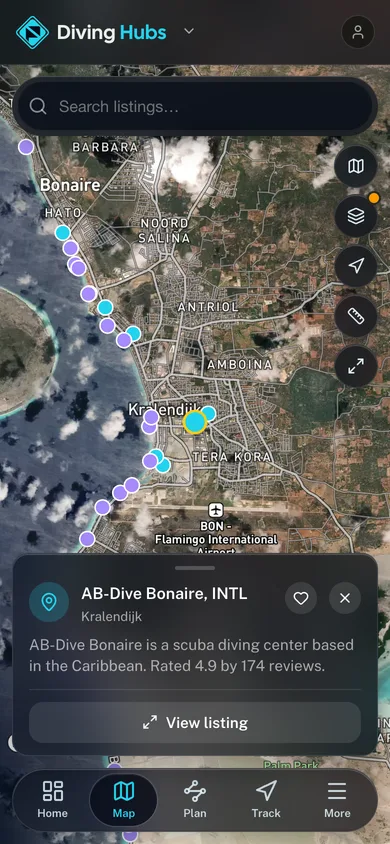
Free, no account needed. Dive-site charts, coastal webcams, and your dive log in your pocket.

  • Every dive shop and charter in your pocket

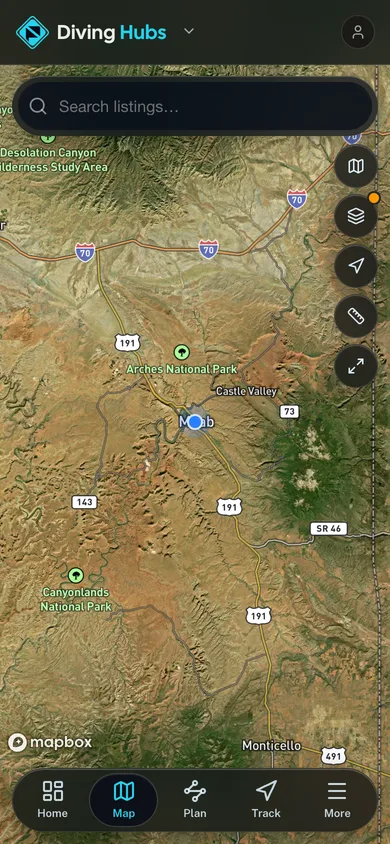
  • Reefs, wrecks, and walls charted on the map

  • File a dive plan before a remote shore entry

  • Coastal and harbor cams before you make the drive

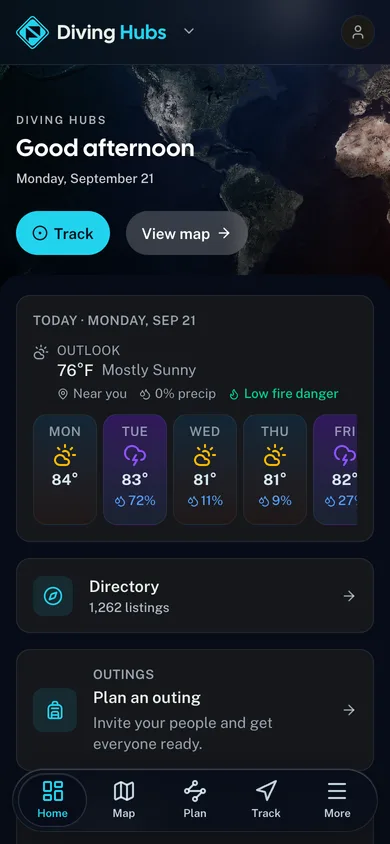
The Diving Hubs app dashboard

For operators

Run your dive business?
Launch your branded surface.

Get your own branded surface in the Diving Hubs app and a directory listing in minutes. Bookings, digital waivers, and your whole operation live in one cockpit.